




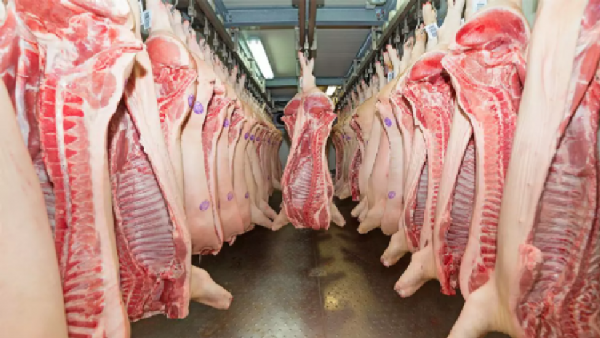
The global pork market will face a year of production adjustment in 2026, with an estimated decline in output toward the second half of the year, in a context marked by persistent health challenges, changes in trade policies, and a growing focus on productivity and efficiency.
This is according to the Rabobank Quarterly Global Pork Market Report – Q1 2026, which anticipates a transitional scenario for the industry.
According to the analysis, global production is expected to show mixed performance: while the first half of the year will still reflect high supply levels in the main producing countries, the second half will show a contraction, driven primarily by a reduction in the sow herd in China and adjustments in Europe. In China, the breeding sow stock is projected to decline to approximately 39 million head by 2026, as part of a strategy to rebalance supply and demand after a period of overproduction. In the United States and the European Union, meanwhile, growth in the sow herd will remain limited, constrained by health pressures, high expansion costs, and increased trade uncertainty, consolidating improved productivity—supported by technological advancements and automation—as the main driver of growth.
International trade will continue to reshape itself in 2026. China, which accounted for 45% of global imports in 2020, has significantly reduced its share thanks to the recovery of its domestic production, while Mexico has positioned itself as the world’s largest importer. Antidumping measures applied by China to European pork and the introduction of quotas by Mexico for suppliers without free trade agreements add uncertainty and could redirect trade flows to new destinations. Furthermore, the persistent effects of African swine fever in Asia and Europe continue to hinder production recovery and generate trade restrictions in some markets.
In terms of demand, Rabobank anticipates stable global consumption, supported by pork’s competitiveness compared to other proteins, especially given the high beef prices. However, growth will be moderate and uneven across regions, contingent on economic performance and consumer confidence, in a scenario that will require greater production discipline and strategic risk management to maintain international competitiveness.