




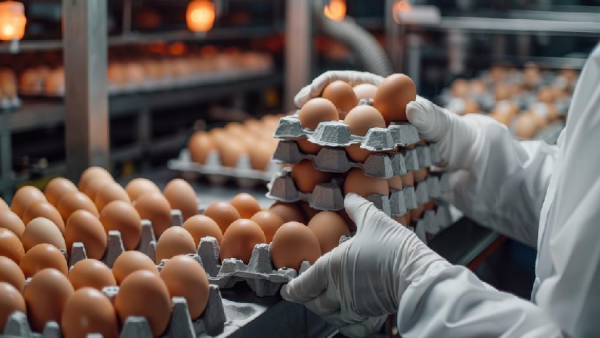
New data from the Federal Statistical Office (Destatis) reveals a significant shift in Germany’s egg industry. While consumer demand continues to hit record highs, Germany is increasingly relying on its own farmers, gradually scaling back on foreign imports.
In 2025, Germany imported a total of 5.4 billion eggs, representing a 3.8% decrease compared to the previous year. This downward trend is even more pronounced over the long term; import volumes have plummeted by 20.9% since 2015, when they stood at 6.9 billion.
The primary contributors to the German market in 2025 were:
- The Netherlands: 3.7 billion eggs (68.7% market share).
- Poland: 861 million eggs (15.9% market share).
- Belgium: 190 million eggs (3.5% market share).
Production surge vs. export decline
While cross-border trade slowed, domestic output reached new heights:
- Domestic production: Stood at 13.7 billion eggs in 2025, a robust 16.4% increase compared to 2015.
- Export volume: Dropped to 1.2 billion eggs, an 11.6% decrease from 2024 and a staggering 40.1% decline compared to a decade ago.
These figures suggest a strategic pivot toward domestic food security and a preference among German consumers for locally sourced poultry products.
Record consumption: 252 eggs per capita
According to preliminary figures from the Federal Office for Agriculture and Food (BLE), egg consumption in Germany has seen a steady rise. In 2025, the average German consumed 252 eggs, up by four eggs per person compared to 2024. For context, the per capita consumption in 2015 was 228 eggs.